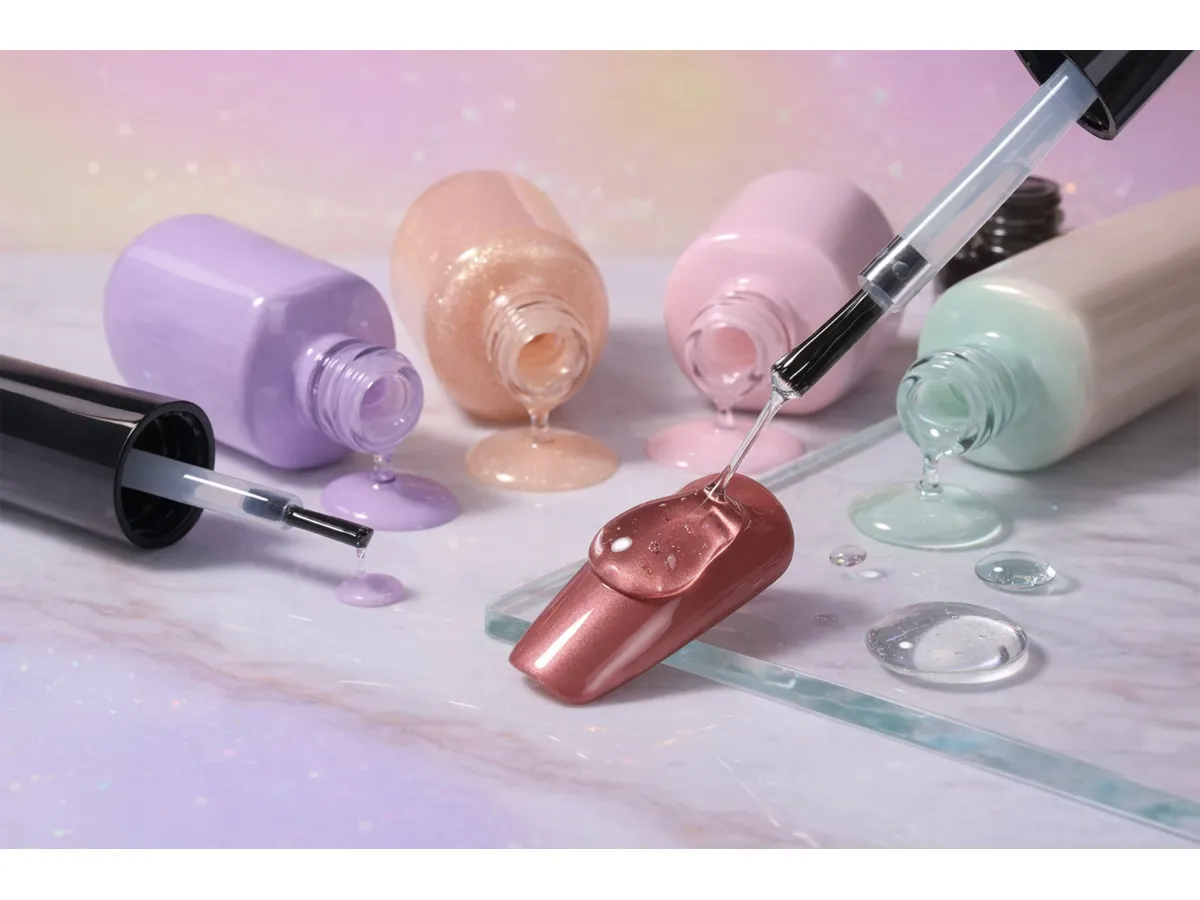
The final stage of a manicure often determines how long-lasting and beautiful the finish will be. A top coat for gel polish plays a key role here. It not only adds shine but also protects the color layer from mechanical damage, scratches, and household chemicals. Choosing the right top coat significantly increases the overall durability of the entire finish and helps maintain the vibrant color for weeks.
What does a top coat do and why is it needed in a coating?
The top coat acts as a protective barrier. It seals all previous layers, preventing water, oils, and other substances from penetrating beneath the surface. This makes the manicure less susceptible to peeling and chipping. Besides providing protection, the top coat is responsible for the final aesthetic effect—mirror shine, soft sheen, or a trendy matte finish.
A good top coat also has smoothing properties and helps conceal minor imperfections in the top layer of gel polish. Without it, even the highest-quality color coating quickly loses its appearance, fades, and starts to cling to clothing. That's why professional nail technicians never skip this step.
Types of top coats: with and without a sticky layer
Top coats are divided into two main types based on the presence of a dispersion (sticky) layer. A top coat without a sticky layer provides a dry, ready-to-use finish immediately after curing—no need to wipe it with a degreaser. This saves time and reduces the risk of accidentally damaging the coating while removing the sticky layer.
Top coats with a sticky layer are more often used for complex designs that require stamping, sliders, or rubbing. The sticky layer acts as an adhesive base for additional elements. However, for classic, single-color manicures, most nail technicians prefer a top coat without a sticky layer for its convenience and cleanliness.
How to choose a top coat for shine, matte finish, and protection
Many nail technicians wonder which top coat is best for gel polish. It all depends on the desired result and the specifics of the job. If you want maximum mirror shine, choose high-gloss top coats with high light reflection. They create a very striking and expensive-looking finish.
Matte or glossy top coat is an eternal debate. Matte top coats impart a velvety texture and look very modern, especially in dark and deep shades. However, they fade slightly faster with heavy use than glossy top coats. Many people choose a compromise: they use matte top coats only on their accent fingers.
For maximum protection and durability, choose thick, wear-resistant top coats. They resist scratches and water better. If you're working with thin nails or applying polish to long nails, choose more flexible formulas to prevent the top coat from cracking as the nail flexes naturally.
Common mistakes when applying top coat
To achieve truly lasting results, it's important to avoid common mistakes. Here are the most common ones:
Applying too thick a layer will result in incomplete polymerization and the appearance of bubbles.
Poor sealing of the free edge - the coating begins to peel off from the ends after just a week.
Insufficient drying time in the lamp - the top remains soft and quickly loses shine.
If the top coat gets on the skin around the nail, it will cause peeling and irritation.
Using incompatible materials from different lines often leads to premature chipping.
Removing the sticky layer too aggressively can damage the top layer of the coating.
Following the correct application technique and using high-quality materials ensures excellent gel polish durability for 3–4 weeks or more.
If you're looking to find a truly great top coat that will delight both you and your clients, check out NailLand.cz. They offer a wide selection of professional gel polish top coats with a variety of effects and characteristics.