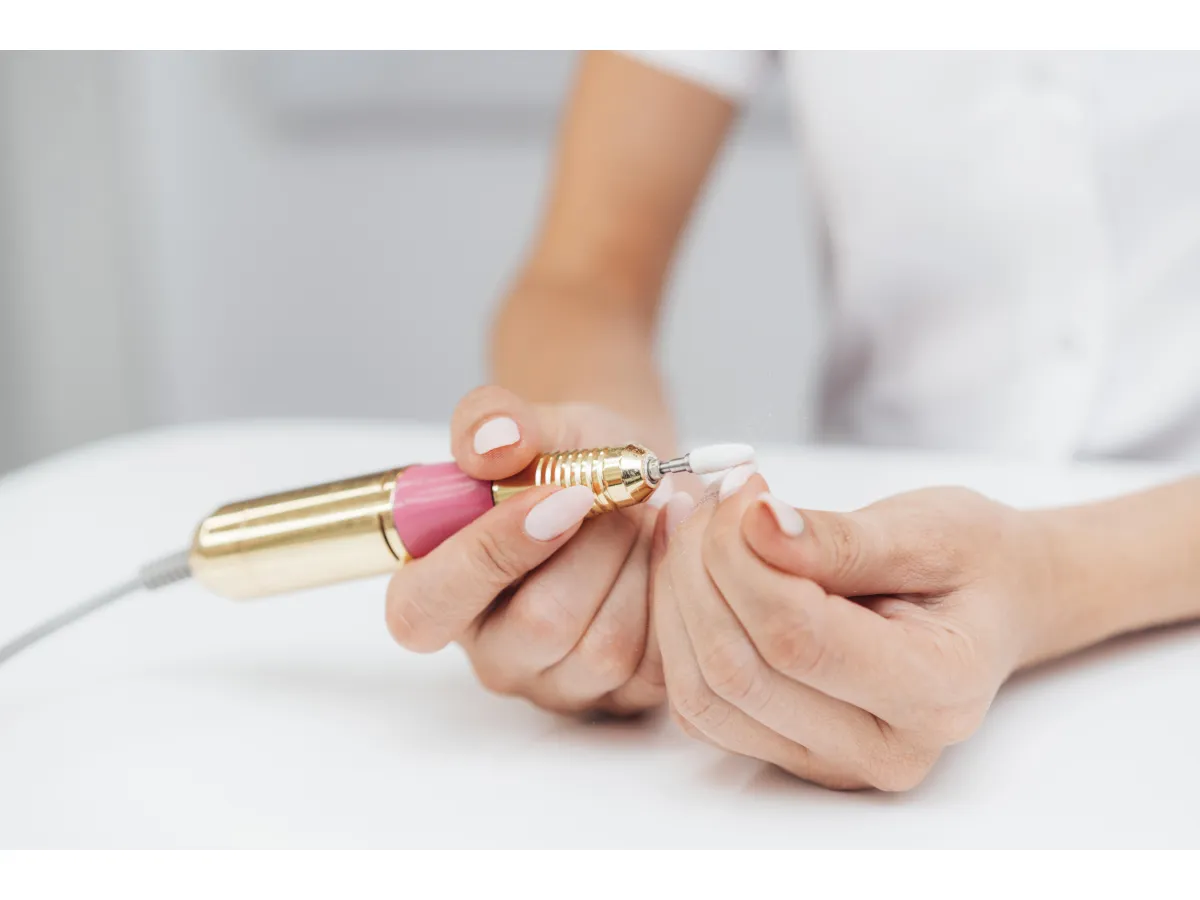
Hardware manicures and pedicures have long replaced traditional nail trimming methods. This procedure is characterized by maximum safety, high speed, and the ability to achieve truly flawless results.
And one of the most important tools in this regard is a manicure drill: which one should you choose and what criteria should you use to compare models available on the market? We've compiled the key technical specifications you should pay special attention to to ensure your purchase is truly reliable and effective for your work.
How to Select a Drill Power and Speed
Power and speed are among the most important criteria for choosing a particular drill model. These are the basic parameters that determine the device's capabilities:
- The speed of professional tools should be 30,000-35,000 rpm. This is a universal standard for professional manicures and gel polish removal.
- The power of a manicure drill indicates the strength of the tool and its ability to remove even the thickest nail polish. A professional tool should have a power rating of 35-65 watts for manicures and 65+ watts for pedicures.
For home use, you can look for less powerful tools – drills with a speed of up to 20,000 rpm and a power rating of 15-30 watts.
Handle Ergonomics: What to Look for
The quality and features of the handle will determine your comfort and, consequently, the results of your work. When choosing a handle, pay particular attention to the absence of vibration – It interferes with a truly clean manicure and leads to loss of control of the tool, which can damage the client's nail plate.
The weight and ergonomics of the handle are also key – it should fit comfortably in the hand, not cause hand fatigue, and not be too light (such handles typically have a weak motor). The optimal tool weight is 150-200 g.
Power supply and its functional features
The power supply is one of the key components of the milling cutter and supports control of the handle. It has special requirements for reliability and a number of functional features:
- Reverse rotation, allowing the milling cutter to rotate both clockwise and counterclockwise. And treat the cuticle equally well on both sides.
- Overload protection is provided by a fuse that can shut off the device immediately if it overheats.
An additional advantage is the display, which allows you to accurately track the number of revolutions – which is especially important for beginners in manicures and pedicures.
Drill bit kit: what should the set of attachments be?
A professional drill bit is usually equipped with everything you need to start working with the tool right away. The kit also includes a set of attachments. Nail technicians typically use diamond bits for cuticle work and ceramic cutters for removing gel polish and acrylic.
Make sure the kit includes sand attachments and caps to help smooth out rough skin during a pedicure.
Choose your manicure drill carefully – which one is best? It all depends on your budget, experience, and requirements for the tool itself. Carefully examine the models available on the market and follow our recommendations to ensure a perfect manicure and a reliable tool that won't let you down when you need it most.
Check out the nail drills section on our website NailLand.Cz : we have selected only proven and reliable machines, as well as all the necessary drill bits for your flawless work!